

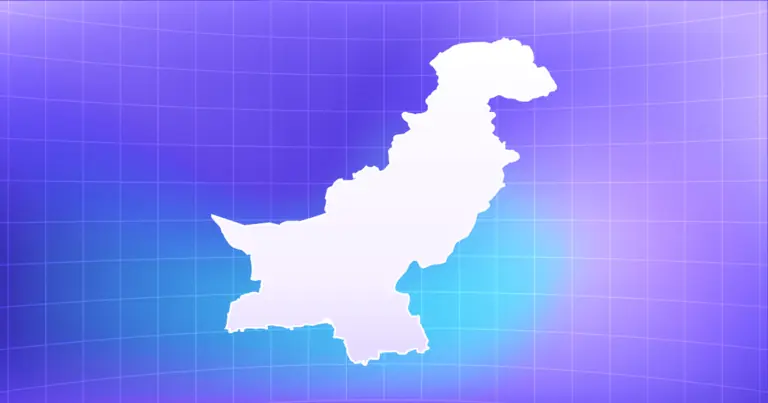
Market Potential: Pakistan
1. E-commerce Market Overview
Pakistan’s e-commerce sector is rapidly emerging as one of South Asia’s most dynamic markets. The total online commerce volume reached approximately $4.5 billion in 2023, with projections estimating a compound annual growth rate (CAGR) of 22-25% through 2027. Digital payments volume is expanding alongside, surpassing $3 billion annually, fueled by increased adoption of mobile wallets and card payments. Mobile commerce accounts for over 60% of all e-commerce transactions, reflecting strong smartphone penetration and consumer preference for mobile shopping. This fast-paced growth is supported by rising internet accessibility and a burgeoning middle class, signaling a large and expanding opportunity for merchants.
2. Key Growth Drivers
Several factors are powering Pakistan’s e-commerce and digital payments boom:
- High Internet & Smartphone Penetration: Over 100 million internet users and smartphone adoption exceeding 50% of the population underpin digital commerce growth.
- Government Digitalization Initiatives: The State Bank of Pakistan’s push for financial inclusion and digital payment infrastructure is reducing cash dependency and encouraging electronic transactions.
- Fintech Innovation: A vibrant fintech ecosystem, including players like JazzCash and Easypaisa, is driving wallet adoption and enabling seamless payments.
- Favorable Demographics: A young population (median age ~22 years) with increasing digital literacy is fueling demand for online shopping and digital payment solutions.
- Regulatory Support: Progressive policies aimed at expanding digital financial services and supporting e-commerce platforms create a conducive environment for growth.
3. Consumer Behavior & Spending Habits
Understanding Pakistani consumers is key to success:
- Average Order Value (AOV): Typically ranges between $25-$40 in major urban centers, with luxury and electronics categories seeing higher spends.
- Local vs. Cross-Border: While local e-commerce dominates, cross-border purchases, especially from China and the Middle East, are growing rapidly due to competitive pricing and product variety.
- Preferred Payment Methods: Cash on delivery (COD) remains popular but digital payments are gaining ground fast. Wallets (JazzCash, Easypaisa) and debit/credit cards are increasingly accepted. BNPL services are nascent but expanding.
- Mobile vs. Desktop: Over 60% of shoppers use mobile devices, emphasizing the need for mobile-optimized platforms and payment flows.
- Payment Culture: There is a cautious but growing trust in cashless payments, with younger consumers leading the shift toward digital wallets and cards.
4. Top Trends
- Rapid Wallet Adoption: Mobile wallets are becoming mainstream, supported by aggressive marketing and government incentives.
- BNPL Emergence: Buy Now, Pay Later options are starting to appear, targeting younger consumers and driving conversion rates.
- Cross-Border Market Expansion: Pakistani consumers are increasingly purchasing from international merchants, creating opportunities for global sellers.
- Open Banking & Instant Payments: The State Bank’s initiatives toward open banking frameworks and instant payment rails will enhance transaction speed and security.
- Rural Digitalization: Expansion of internet and mobile coverage in rural areas opens untapped e-commerce potential beyond major cities.
5. Go-to-market Potential
Pakistan represents a high-growth, strategically important market for merchants ready to capitalize on a young, digitally savvy population and a rapidly evolving payment landscape. Retailers in electronics, fashion, FMCG, and cross-border goods should seriously consider entering or expanding in Pakistan now to capture early mover advantages. However, merchants must tailor their payment acceptance strategies to include wallets, COD, and mobile-first solutions to align with local consumer preferences and build trust. With the right approach, Pakistan offers a compelling gateway to South Asia’s expanding digital economy.
Payments Landscape
📘 Intro
Pakistan's payment landscape is rapidly evolving, driven by increasing smartphone penetration and government support for digital financial inclusion. While cash remains significant, especially outside urban centers, digital payments are gaining strong traction, particularly through mobile wallets and QR code-based systems. Understanding these local preferences and infrastructure nuances is essential for merchants aiming to optimize checkout flows and reduce friction in Pakistan’s diverse market.
Payment Methods in Use
In Pakistan, cash on delivery (COD) still plays a major role, especially for e-commerce, reflecting trust issues and limited card penetration. However, digital payments are growing quickly, with mobile wallets like JazzCash and Easypaisa leading the way. These wallets enable instant mobile payments through QR codes and USSD codes, making them convenient for both urban and rural users. Bank cards, primarily Visa and Mastercard, are accepted but less common for everyday purchases due to lower card ownership and online trust barriers.
Buy Now, Pay Later (BNPL) options are emerging but remain niche, largely offered by fintech startups targeting younger, urban consumers. Cryptocurrency is not widely used for payments due to regulatory uncertainty. Invoicing and bank transfers are prevalent in B2B transactions but less so in retail.
Typical payment flows vary: mobile wallets often use embedded apps or QR code scanning within merchant apps, while cards usually involve redirecting to 3D Secure authentication pages. Recurring payments are rare outside telecom and utility subscriptions, where direct debit mechanisms or wallet top-ups are common.
| Method | Popularity | Use Case | Risk | Recurring |
|---|---|---|---|---|
| JazzCash | ⭐⭐⭐⭐ | Mobile payments, P2P, bills | 🟢 Low | ✅ |
| Easypaisa | ⭐⭐⭐⭐ | Mobile wallet, QR payments | 🟢 Low | ✅ |
| Visa/Mastercard | ⭐⭐ | Online shopping, travel | 🟡 Medium | ✅ |
| Cash on Delivery | ⭐⭐⭐⭐ | E-commerce, rural areas | 🟠 Medium | ❌ |
| Bank Transfers | ⭐⭐ | B2B, invoicing | 🟢 Low | ✅ |
Conversion & UX Patterns
Mobile dominates Pakistan’s internet usage, with over 85% of users accessing e-commerce via smartphones, making mobile-optimized checkouts critical. One-page checkout flows that minimize form fields and integrate wallet payments directly tend to perform best. QR code payments are increasingly popular, so allowing users to pay by scanning codes within wallet apps is a must-have.
Localization is vital: Urdu and English are commonly used, but Urdu support can boost trust. Prices should always be displayed in Pakistani Rupees (PKR), with clear currency conversion if targeting international customers. Given slower and inconsistent internet connections in some areas, lightweight pages and offline-friendly flows improve conversion.
For returning customers, card-on-file and one-click payments are still uncommon due to low card usage and consumer hesitation. Wallets with stored balances, however, enable faster repeat purchases. Retry logic should be forgiving, as payment failures due to network issues are frequent.
Fraud & Chargeback Risks
Pakistan’s fraud risk is moderate but rising with increased digital adoption. Common schemes include card testing fraud, where attackers try small transactions to validate stolen card data, and refund abuse, especially in COD-heavy sectors. Non-3DS card payments and international cards carry higher risk and often trigger chargebacks.
Local consumers expect OTP (One-Time Password) verification via SMS for authentication, and 3D Secure (3DS) is increasingly enforced by banks, helping reduce fraud. Velocity checks — limiting the number of transactions per card or device — are recommended due to frequent card testing attempts. Merchants should be cautious with COD orders from new customers or high-value items, as these have higher fraud and return rates.
| Risk Type | Level | Common Trigger | Mitigation Tip |
|---|---|---|---|
| Card testing | 🔴 | Repeated small card charges | Implement per-IP and BIN limits; use 3DS |
| Refund abuse | 🟡 | COD orders, return policies | Enforce clear return policies; verify customer identity |
| Chargebacks | 🟡 | Non-3DS payments | Use 3DS authentication; prefer wallet payments |
Final Summary
To succeed in Pakistan, merchants should prioritize mobile wallet integrations like JazzCash and Easypaisa, offer QR code payment options, and maintain COD as a fallback for less digitally-savvy customers. Optimizing for mobile with localized language and currency builds trust and reduces drop-offs. Strong fraud controls, especially 3D Secure and transaction velocity limits, are essential to minimize losses. Starting with these focused steps will help merchants capture Pakistan’s growing digital payments market while managing common risks effectively.
PSP Landscape in Pakistan
PSP Market Overview
The Payment Service Provider (PSP) market in Pakistan is rapidly evolving, characterized by a blend of emerging fintech innovators and established bank-backed acquirers. While still in a growth phase, the ecosystem is gaining maturity as digital payment adoption accelerates, driven by government initiatives, increased smartphone penetration, and a young, tech-savvy population. Payment Service Providers in Pakistan cater predominantly to eCommerce, mobile wallets, and remittance verticals, with growing interest from SaaS and digital services sectors. The market remains somewhat fragmented, with a mix of local fintech startups, international entrants, and traditional banks competing to capture the expanding digital payments opportunity. However, regulatory frameworks and infrastructure challenges continue to shape the competitive landscape.
PSP Types in the Local Market
| PSP Type | Description | Role in Market | Typical Users |
|---|---|---|---|
| Local PSPs | Fintech companies and startups headquartered in Pakistan offering tailored payment solutions | Driving innovation and local payment method support | SMEs, startups, digital merchants |
| International PSPs | Global providers entering Pakistan via partnerships or direct licensing | Bringing global payment rails and cross-border capabilities | Large enterprises, exporters, marketplaces |
| Aggregators & Platforms | Payment facilitators bundling multiple payment options under one integration | Simplifying onboarding and enabling multi-channel payments | Small merchants, SaaS platforms |
| Bank Acquirers | Traditional banks offering merchant acquiring and payment gateway services | Providing trusted settlement and compliance infrastructure | Established retailers, corporate clients |
PSP Discovery Considerations
- Opaque Market Dynamics: Many PSPs in Pakistan operate with limited public transparency, requiring merchants to rely on industry contacts or referrals to identify suitable providers.
- Bank Partnerships as Gateways: Since banks play a central role in the payments ecosystem, merchants often discover PSPs through banking relationships or via bank-recommended partners.
- Regulatory Compliance Barriers: Due to evolving regulatory requirements by the State Bank of Pakistan, some PSPs maintain selective client onboarding, particularly for high-risk verticals, creating hidden obstacles.
- Digital Ecosystem Channels: Increasingly, merchants access PSPs via digital commerce platforms and technology incubators that bundle payment solutions as part of their service offerings.
Selection Factors
Choosing a PSP in Pakistan demands careful evaluation of local payment method coverage, as domestic preferences heavily favor mobile wallets (e.g., JazzCash, Easypaisa), bank transfers, and cash-on-delivery options. Payout and settlement processes can vary significantly; merchants should prioritize PSPs offering timely settlements in PKR with clear foreign exchange handling for cross-border sales. Risk management capabilities are critical, especially for sectors like gaming, crypto, and online gambling, which face stricter scrutiny and limited PSP support. Integration flexibility also matters, with APIs and plug-and-play SDKs becoming standard expectations to accommodate diverse merchant tech stacks.
Key considerations include:
- Local Payment Method Support: Integration with leading Pakistani wallets and bank channels.
- Settlement Speed & Currency Options: Efficient PKR payouts and multi-currency settlements for exporters.
- Regulatory Compliance & Risk Handling: PSPs with strong AML/KYC processes and high-risk vertical expertise.
- Integration & Technical Support: Availability of developer-friendly APIs and responsive onboarding assistance.
Notable PSPs in Pakistan
| PSP Name | Type | Payment Methods Supported | Ideal Merchant Profile | Unique Features / Positioning |
|---|---|---|---|---|
| JazzCash | Local | Mobile wallets, bank transfers, QR payments | Retailers, SMEs, mobile-first merchants | Largest mobile wallet, deep local network |
| Easypaisa | Local | Mobile wallets, bill payments, QR codes | Micro-merchants, eCommerce | Early mover with extensive agent network |
| PayFast.pk | Local | Credit/debit cards, mobile wallets, bank transfers | SMEs, eCommerce | Focus on seamless online payment integration |
| 2Checkout (Verifone) | International | Credit cards, PayPal, alternative payments | SaaS, digital exports | Strong global reach with localized PKR settlement |
| HBL Pay | Bank Acquirer | Cards, bank transfers, mobile payments | Large enterprises, corporates | Backed by one of Pakistan’s largest banks |
| FonePay | Local | QR payments, mobile wallets, cards | Retail chains, marketplaces | Emphasis on QR-based acceptance and interoperability |
| PayPak | Local/National | Domestic card scheme, debit/credit cards | Banks, large merchants | Pakistan’s domestic card network, growing acceptance |
This comprehensive overview equips merchants planning to accept payments in Pakistan with critical insights on how to choose a PSP, navigate discovery channels, and align payment strategies with the local market’s unique characteristics. Payment Service Providers in Pakistan continue to innovate rapidly, making it essential for businesses to select partners that balance local expertise with technological agility.
Compliance & Regulatory Landscape: Pakistan
Entering the Pakistani market as an online merchant or payment service provider (PSP) requires a clear understanding of the local regulatory framework governing electronic payments, financial services, and data privacy. Pakistan’s regulatory landscape is shaped by multiple authorities, with a strong focus on anti-money laundering (AML), customer due diligence, and compliance with local financial laws. This guide will help you navigate the key legal requirements to accept payments from Pakistani customers confidently and compliantly.
Regulatory Bodies and Licensing in Pakistan
The primary regulator overseeing payment systems, financial institutions, and electronic money activities in Pakistan is the State Bank of Pakistan (SBP)
locally known as “پاکستان کا اسٹیٹ بینک”. SBP enforces licensing for banks, payment system operators, and non-bank PSPs, ensuring the integrity and security of digital payments.
Key Regulatory Authorities
| Regulator Name | Role | Website |
|---|---|---|
| State Bank of Pakistan (SBP) | Central bank and primary regulator for financial services, payment systems, and AML compliance | sbp.org.pk |
| Securities and Exchange Commission of Pakistan (SECP) | Regulates corporate entities and non-banking financial companies (NBFCs) | secp.gov.pk |
| Federal Board of Revenue (FBR) | Tax authority enforcing tax compliance on merchants and financial transactions | fbr.gov.pk |
| Pakistan Telecommunication Authority (PTA) | Regulates telecom and internet services, relevant for online payment infrastructure | pta.gov.pk |
Licensing Framework for Payment Service Providers
Pakistan does not have a distinct electronic money institution (EMI) license like the EU but operates under a broad licensing regime for PSPs and payment system operators regulated by SBP. The main license types include:
| License Type | Description | Applicable Entities |
|---|---|---|
| Payment System Operator License | Required for entities operating payment systems and gateways | Banks, PSPs, fintech companies |
| Payment Service Provider License | For non-bank PSPs offering payment processing and remittance services | Fintechs, remittance companies, mobile wallet providers |
| Merchant Acquiring License (via Banks) | Banks act as acquiring banks, providing merchant accounts | Banks only; merchants onboard through banks or PSPs |
Foreign PSPs cannot directly operate in Pakistan without partnering with a licensed local entity or obtaining SBP approval. Cross-border payment facilitation is tightly controlled, and local licensing or partnerships are essential for compliance.
Merchant Requirements for Accepting Payments in Pakistan
To accept payments from Pakistani customers, merchants must comply with several local rules and regulations:
- Local Business Registration: While foreign merchants can sell to Pakistani customers, local company registration or a Pakistani legal presence is often required to open a merchant account with acquiring banks or PSPs. Some international PSPs facilitate cross-border payments without local registration but with limited payment methods.
- Industry Restrictions: Certain sectors such as gambling, adult content, and cryptocurrency exchanges face strict regulatory scrutiny or outright bans. Cryptocurrency-related businesses require explicit licensing from SBP and SECP, which is currently limited.
- Tax Compliance: Merchants must register with the Federal Board of Revenue (FBR) for sales tax and income tax purposes if they have a local presence or meet turnover thresholds. Pakistan enforces withholding tax on electronic transactions, which merchants must account for.
- Permits and Licenses for Specific Sectors: Businesses in regulated industries (e.g., insurance, financial advisory) may require additional licenses from SECP or other bodies.
- Prohibited Goods and Services: Merchants must ensure their offerings comply with Pakistani laws. The sale of narcotics, counterfeit goods, and items banned under local law is strictly prohibited.
Financial, AML & KYC Obligations in Pakistan
Pakistan has robust AML and KYC regulations aligned with Financial Action Task Force (FATF) recommendations, enforced primarily by the State Bank of Pakistan and the Financial Monitoring Unit (FMU).
- KYC Requirements: Both PSPs and merchants must verify customer identities using government-issued documents such as the Computerized National Identity Card (CNIC). Enhanced due diligence applies to high-risk customers and transactions.
- AML Compliance: PSPs are required to monitor transactions for suspicious activity, maintain records, and report suspicious transactions to the FMU. Merchants may be asked to provide source of funds information for large or unusual transactions.
- Transaction Monitoring & Limits: SBP sets thresholds for transaction limits and requires continuous monitoring to prevent money laundering and terrorist financing. Merchants should be prepared to support PSPs in compliance reporting.
- Reporting Obligations: PSPs must submit regular reports to SBP and FMU, including suspicious transaction reports (STRs). Merchants must cooperate with PSPs during compliance audits.
Data Protection & Privacy Laws in Pakistan
Pakistan’s data protection landscape is evolving, with the Personal Data Protection Bill (2023) being the most significant recent development aimed at regulating personal data processing.
- Data Protection Framework: While Pakistan does not yet have a fully enforced GDPR-equivalent law, the Personal Data Protection Bill sets out requirements for lawful processing, consent, data subject rights, and data security.
- Supervisory Authority: The bill proposes establishing a dedicated Data Protection Authority (DPA) to oversee compliance, though it is not yet fully operational.
- Cross-border Data Transfers: The draft legislation restricts transferring personal data outside Pakistan unless the destination country offers adequate protection or specific safeguards are in place.
- Sector-Specific Rules: Financial data is subject to additional confidentiality and security obligations under SBP regulations and the Electronic Transactions Ordinance (2002).
- Data Localization: While not mandatory yet, there is increasing regulatory interest in local data storage, especially for financial and biometric data.
Merchants and PSPs operating in Pakistan should proactively implement strong data protection policies and prepare for forthcoming regulatory enforcement.
Helpful Resources & Official Links
- State Bank of Pakistan (SBP) — Central bank and payment systems regulator
- Securities and Exchange Commission of Pakistan (SECP) — Corporate and financial services regulator
- Federal Board of Revenue (FBR) — Tax authority and compliance guidelines
- Pakistan Personal Data Protection Bill (2023) Summary — Overview of data protection legislation
- Financial Monitoring Unit (FMU) — AML/CFT reporting authority
- Pakistan Telecommunication Authority (PTA) — Telecom and internet regulation
Navigating Pakistan’s compliance landscape requires careful planning, especially regarding licensing, AML/KYC, and data privacy. Partnering with local PSPs or banks and staying updated on evolving regulations will help merchants unlock the potential of Pakistan’s growing digital economy while maintaining regulatory compliance.
Onboarding Process in Pakistan
Overview
Onboarding with payment service providers (PSPs) in Pakistan involves a structured and compliance-focused process designed to align with local regulatory requirements and anti-money laundering standards. Pakistan’s payment ecosystem is rapidly evolving, supported by the State Bank of Pakistan’s efforts to promote digital payments. However, merchants often face challenges related to stringent KYC (Know Your Customer) regulations, documentation in English, and ensuring alignment between their business model and the PSP’s risk appetite.
A unique aspect of onboarding in Pakistan is the emphasis on verifying local business registration and the Ultimate Beneficial Owner (UBO) details, alongside the necessity to comply with both local and international compliance standards. Additionally, language barriers and the need for notarized or apostilled documents can add complexity. Understanding these nuances can help merchants avoid delays and improve their chances of swift approval.
Onboarding Journey: Step-by-Step
-
Submit Application to PSP
Merchants start by filling out an application form on the PSP’s platform, providing basic business information and contact details. It’s important to choose a PSP familiar with the Pakistani market to ensure smoother processing. -
Company Verification (KYC, UBO, Legal Documents)
The PSP requests detailed documents verifying the company’s legal existence, ownership structure, and key stakeholders. This includes submitting company registration certificates, tax documentation, and identification of the Ultimate Beneficial Owners. Documents must often be in English or professionally translated. -
Website & Product Review
The PSP reviews the merchant’s website and product offerings to ensure compliance with local laws and PSP policies. This includes checking for clear refund policies, privacy statements, and ensuring the product does not fall under high-risk or prohibited categories. -
Risk Scoring and Compliance Checks
Using the submitted documents and business profile, the PSP conducts a risk assessment focusing on the industry type, transaction volumes, and geographic reach. Merchants with limited processing history or operating in high-risk sectors may face additional scrutiny. -
Contract Signing & Account Creation
Once approved, the merchant signs the service agreement. In Pakistan, contracts may require notarization or digital signatures compliant with local laws. The PSP then creates the merchant account for payment processing. -
Technical Setup and Integration
Merchants receive API keys and integration guidelines to connect their website or app with the PSP’s payment gateway. Local PSPs often provide support for popular platforms and may require additional security certifications like PCI DSS compliance. -
Test Transactions
Before going live, merchants perform test transactions to verify the integration’s functionality and transaction flow. This step helps identify and resolve any technical or compliance issues. -
Go-Live & Ongoing Monitoring
After successful testing, the merchant account goes live. PSPs continuously monitor transactions for fraud, compliance, and chargeback risks, requiring merchants to maintain transparent and compliant business practices.
Key Documents & Requirements
| Document | Required for | Notes |
|---|---|---|
| Company Registration | KYC | Must be issued by SECP or relevant authority; English or certified translation required |
| National Tax Number (NTN) | KYC | Proof of tax registration with FBR (Federal Board of Revenue) |
| Passport or CNIC of UBO | KYC | CNIC (Computerized National Identity Card) for Pakistani nationals; passport for foreigners |
| Bank Account Proof | KYC | Bank statement or letter confirming account ownership |
| Processing History | Risk Review | Optional but beneficial for merchants with prior transaction volume |
| Website URL & Business Model Description | Product Review & Compliance | Clear explanation of products/services offered; refund and privacy policy must be present |
| Digital Signature Certificate (DSC) | Contract Signing | Sometimes required for contract validation in Pakistan |
Local documentation often requires notarization or attestation by a gazetted officer, especially for foreign-owned entities. Apostille certification may be necessary for documents originating outside Pakistan.
Risk Factors & Red Flags
One common reason for onboarding delays or rejection is a mismatch between the merchant’s declared business model and the actual products or services sold. For example, a merchant registered as a software provider but selling unregulated pharmaceuticals will face immediate rejection.
Insufficient processing history or lack of verifiable transaction data can lead PSPs to classify the merchant as high risk, especially if the business is new or operates in a sector with elevated fraud rates, such as online gambling or adult content.
Websites lacking transparent policies — such as clear refund, privacy, and terms of service — raise compliance concerns and can cause onboarding to stall. PSPs also scrutinize merchants operating in industries blacklisted by Pakistan’s financial regulators or international card schemes.
Finally, incomplete or poorly translated documentation often results in repeated requests for clarification, prolonging the onboarding timeline.
Insider Tips from Experts
Establish a Local Legal Entity
PSPs in Pakistan show greater trust and offer better terms to merchants with a registered local presence. This reduces friction in KYC and compliance checks and enhances credibility with banks.
Prepare Complete, English-Translated Documents in Advance
Having all required documents professionally translated and notarized before submission can save weeks. Ensure translations accurately reflect the original content to avoid discrepancies.
Maintain a Transparent Website with Clear Policies
Including detailed refund, privacy, and terms of service pages aligned with Pakistani regulations builds trust and expedites product reviews.
Leverage PSPs Familiar with Pakistani Regulations
Partnering with providers experienced in local compliance reduces misunderstandings and accelerates onboarding.
Demonstrate Processing History When Possible
If you have prior transaction data from other PSPs or payment gateways, sharing this information can lower perceived risk and improve approval chances.
By following these guidelines and understanding the specific requirements of the Pakistani market, merchants can navigate the onboarding process efficiently and start accepting payments with confidence.
Fees & Settlement
Settlement Currencies
Merchants accepting payments in Pakistan typically receive their payouts in Pakistani Rupees (PKR), which is the official local currency. Most Payment Service Providers (PSPs) operating domestically settle transactions in PKR to comply with local regulations and currency control policies enforced by the State Bank of Pakistan. For cross-border merchants, some PSPs offer settlement in major foreign currencies such as USD or EUR, but this is less common and often subject to additional compliance checks and FX controls.
It is important to note that Pakistan maintains currency repatriation restrictions to manage foreign exchange reserves, which can affect the timing and availability of foreign currency settlements. International merchants often prefer settlement in PKR to avoid delays and extra conversion costs, but if foreign currency settlement is requested, expect additional scrutiny and potential delays due to regulatory approvals.
Payout Rules & Timing
Payout frequency in Pakistan varies by PSP but generally follows these patterns:
- Daily or Weekly Settlements: Most local PSPs process payouts on a daily or weekly basis, with funds credited to merchant bank accounts within 1 to 3 business days after the transaction settlement date.
- Minimum Payout Thresholds: Minimum payout amounts typically range from PKR 5,000 to PKR 20,000, depending on the PSP’s policy. Merchants must accumulate this minimum balance before a payout is triggered.
- Processing Delays: Due to local banking system processing times and regulatory compliance checks, payout timing can be delayed during public holidays or month-end when banks perform liquidity reviews.
- Batch vs. Real-time Settlements: While most settlements are batched, some PSPs offer near real-time payout options for premium merchants or those using advanced API integrations.
- For Foreign Merchants: Non-resident merchants may experience longer payout cycles, often extended by 3 to 5 business days, due to additional KYC and anti-money laundering (AML) checks required by Pakistani banks and regulators.
Merchants should confirm payout schedules and thresholds with their PSP to optimize cash flow management.
Typical Fees
The fee structure for payment processing and settlement in Pakistan typically includes the following components. Below is an indicative table based on industry standards and common PSP offerings:
| Fee Type | Typical Range / Notes |
|---|---|
| Transaction Fees | 2.5% to 4.0% per payment (credit/debit cards) |
| Mobile Wallet Payments | 1.5% to 3.0% per transaction |
| Payout Fees | PKR 50 to PKR 200 per payout |
| FX Conversion Fees | 1.5% to 3.5% markup on currency conversion |
| Setup / Integration Fees | PKR 10,000 to PKR 50,000 one-time fee (varies) |
| Chargeback Fees | PKR 1,000 to PKR 3,000 per dispute |
Key considerations:
- PSP commissions in Pakistan tend to be higher for cross-border payments due to additional compliance and FX risks.
- FX conversion fees apply if the merchant opts for foreign currency settlement or if the customer pays in a non-PKR currency.
- Some PSPs may charge additional fees for faster payout options or premium support services.
- Merchants should be aware of potential hidden fees such as account maintenance or reconciliation charges, which vary by provider.
Tax & Withholding Notes
Pakistan enforces several tax and withholding regulations that impact merchant settlements:
- Withholding Tax on Merchant Payments: Under Pakistan’s tax laws, PSPs are often required to withhold a portion of merchant payouts as withholding tax (WHT). The rate can vary but typically ranges from 5% to 15%, depending on the nature of the transaction and the merchant’s tax status.
- Sales Tax / GST: Payment processing services in Pakistan are subject to Sales Tax at 17%, which PSPs generally include in their fees. Merchants should verify whether these taxes are recoverable or passed on in the pricing.
- Tax Residency Certificates: Foreign merchants operating in Pakistan or receiving payouts from Pakistani customers may need to provide valid tax residency certificates to benefit from reduced withholding tax rates under applicable Double Taxation Avoidance Agreements (DTAA).
- Non-resident Merchant Rules: Non-resident companies may face additional tax compliance requirements, including registration with Pakistan’s Federal Board of Revenue (FBR) and filing of tax returns if they have a taxable presence or source of income in Pakistan.
- Reporting Obligations: PSPs are obligated to report transaction data to tax authorities, and merchants should maintain accurate records to comply with audits and tax assessments.
Foreign merchants should engage local tax advisors to navigate complex withholding tax regimes and avoid double taxation, especially when dealing with cross-border payments and settlements in PKR.
Merchants planning to accept payments in Pakistan should carefully evaluate PSP fees, settlement currencies, payout timings, and tax implications to optimize their payment strategy and ensure smooth cash flow. Due to evolving regulatory frameworks and currency controls, it is advisable to consult directly with chosen PSPs and local financial experts for the most current and tailored guidance.
Go-to-Market Strategies
Entering the Pakistan market requires a nuanced approach shaped by your business model, risk profile, and transaction volume. Pakistan’s payment ecosystem is evolving rapidly, with a mix of local regulations, limited international payment gateways, and a growing digital consumer base. Selecting the right go-to-market (GTM) strategy hinges on balancing compliance, customer experience, and operational scalability tailored to your merchant profile.
Typical Merchant Scenarios
| # | Merchant Profile | Jurisdiction | Risk | Volume | Audience |
|---|---|---|---|---|---|
| 1 | Small local e-commerce startup | Local (Pakistan) | Low | Low–Medium | Domestic consumers |
| 2 | International SaaS targeting Pakistan | Offshore (US/EU) | Medium | Medium–High | Tech-savvy professionals |
| 3 | High-risk gaming or adult content site | Offshore | High | Medium–High | Global & Pakistan users |
| 4 | Established multinational retailer | Global (EU/US) | Low | High | Broad international |
| 5 | Freelancers & SMEs using digital wallets | Local/Offshore hybrid | Low–Medium | Low–Medium | Local freelancers & SMEs |
Recommended Strategy per Scenario
1. Small Local E-commerce Startup
For small Pakistani e-commerce businesses primarily serving domestic customers, partnering with a local Payment Service Provider (PSP) is the most effective strategy. Providers like JazzCash, Easypaisa, and PayFast offer seamless integration with local bank accounts and mobile wallets, which dominate payment preferences in Pakistan. This approach ensures compliance with State Bank of Pakistan regulations and maximizes conversion by supporting popular local payment methods such as bank transfers, mobile wallets, and cash-on-delivery options. The downside is that these PSPs typically lack robust international payment acceptance, limiting cross-border sales. Onboarding is relatively fast, and fees are generally competitive, making this ideal for low to medium volume merchants focused on local growth.
2. International SaaS Targeting Pakistan
International SaaS companies serving Pakistani users should adopt a hybrid GTM strategy combining global PSPs like Stripe or PayPal (where available) with local payment options via partners such as 2Checkout or Payoneer. Since Stripe is not officially available in Pakistan yet, using global aggregators that support multiple currencies and payment types helps mitigate risk and broadens payment acceptance. Local bank transfers and mobile wallet options can be added via integrations with local PSPs or third-party plugins. This dual approach balances compliance challenges and customer convenience, though onboarding can be slower due to layered KYC checks and regulatory scrutiny. The trade-off is worth it to capture tech-savvy, internationalized audiences willing to pay via credit cards or digital wallets.
3. High-Risk Gaming or Adult Content Site
Merchants operating in high-risk verticals such as gaming or adult content face significant barriers in Pakistan due to stringent regulatory restrictions and limited PSP willingness to onboard them. The recommended approach is to use offshore PSPs specializing in high-risk accounts, such as CCBill or Epoch, combined with cryptocurrency payment options to circumvent local banking restrictions. These providers offer tailored fraud management and chargeback protection, but often at higher fees and longer onboarding times. Accepting payments in USD or other stable currencies is common, though this limits local currency acceptance and may reduce conversion among Pakistani users. Compliance risks remain high, so maintaining transparent business practices and legal counsel is essential.
4. Established Multinational Retailer
For large multinational retailers with high transaction volumes, leveraging global PSPs like Adyen, Worldpay, or Checkout.com is optimal. These providers support multiple currencies, including PKR, and offer localized payment methods such as bank transfers and mobile wallets through partnerships with local acquiring banks. The benefits include streamlined global reconciliation, advanced fraud prevention, and high uptime SLAs. However, integrating with local PSPs for cash-on-delivery or alternative payments can further boost conversion in Pakistan’s cash-prevalent market. The main trade-off is complexity in compliance and longer onboarding due to cross-border regulatory requirements, but these are manageable with dedicated local legal and compliance teams.
5. Freelancers & SMEs Using Digital Wallets
Pakistan’s growing freelance and SME sector benefits from hybrid payment solutions combining local digital wallets (JazzCash, Easypaisa) with offshore payout platforms like Payoneer and TransferWise (Wise). For freelancers, opening accounts with these providers enables receiving international payments and converting funds into PKR efficiently. SMEs can integrate local PSPs for domestic sales and use Payoneer’s mass payout features for supplier payments. This approach balances regulatory compliance and operational flexibility, though currency conversion fees and payout delays can impact cash flow. Choosing providers with strong local support and transparent fee structures is critical for sustainability.
Final Tips
- Consider launching with a global PSP that supports multi-currency billing and later integrate local PSPs to optimize conversion and reduce costs for Pakistani customers.
- Prioritize local payment methods and mobile wallets in your checkout flow to capture the majority of Pakistan’s digital consumers who rely heavily on these channels.
- Stay vigilant on regulatory updates from the State Bank of Pakistan, especially regarding cross-border payments and foreign exchange controls, to avoid compliance pitfalls.
FAQ & Expert Tips
Intro
This section draws on real support cases, merchant inquiries, detailed market studies, and hands-on onboarding experience in Pakistan. Here, we address common merchant doubts and provide actionable insights to help you navigate the complexities of entering the Pakistani market and opening a Merchant ID (MID) efficiently.
Frequently Asked Questions
🇵🇰 What are the key requirements to open a Merchant ID (MID) in Pakistan?
To open a MID in Pakistan, merchants must typically provide a valid business registration, proof of a local bank account, and comply with the State Bank of Pakistan’s regulations on e-commerce transactions. Unlike some Western markets, Pakistan emphasizes stringent Know Your Customer (KYC) verification, often requiring notarized documents and detailed ownership disclosures. Expect the onboarding process to take longer—usually 3 to 6 weeks—due to manual compliance checks and tighter anti-fraud measures.
💳 How do payment acceptance options in Pakistan differ from other markets?
Credit and debit card usage is growing but still limited compared to Europe or the US, with many consumers preferring direct bank transfers, mobile wallets like JazzCash and Easypaisa, or cash-on-delivery (COD). International card acceptance can be complicated by higher cross-border fees and occasional processing delays. Merchants should integrate multiple payment methods to maximize conversion and cater to local preferences.
⚠️ What are the common compliance risks when onboarding in Pakistan?
Pakistan has strict AML (Anti-Money Laundering) and CFT (Counter Financing of Terrorism) rules enforced by the Financial Monitoring Unit (FMU). Non-compliance can result in hefty fines or suspension of payment services. Merchants must ensure all KYC documents are authentic and up-to-date. Additionally, Pakistan’s foreign exchange controls may affect settlement currency options, so understanding local currency restrictions is crucial.
📄 Are there any specific tax implications for foreign merchants operating in Pakistan?
Yes, Pakistan imposes withholding taxes on digital services and cross-border payments. Foreign merchants may be required to register for Pakistan’s Sales Tax and obtain an NTN (National Tax Number). Compared to markets like the EU, where VAT rules are harmonized, Pakistan’s tax system is less predictable and may require local tax advisory to avoid unexpected liabilities or delayed payments.
🔍 How reliable are local payment gateways and PSPs in Pakistan?
While local gateways like PayFast and Fonepay offer valuable connectivity to Pakistani consumers, they sometimes face technical reliability issues and limited international scalability. Many merchants prefer hybrid models combining local PSPs for domestic transactions and international processors for cross-border sales to mitigate downtime and reduce currency conversion costs.
📦 What logistics and delivery challenges should merchants expect in Pakistan?
Pakistan’s fragmented courier infrastructure and customs clearance processes often cause delivery delays, especially outside major cities like Karachi, Lahore, and Islamabad. Merchants should partner with experienced local logistics providers familiar with regional nuances. Cash-on-delivery remains a dominant payment method tied to last-mile delivery reliability, so poor logistics can directly impact payment success rates.
Expert Tips
⏱️ Plan for longer onboarding and settlement cycles
Expect the MID application and verification process in Pakistan to take significantly longer than in mature markets. Banks and PSPs conduct thorough manual KYC and compliance checks, which can delay approvals. Similarly, settlement of funds can take 7-14 business days due to currency controls and banking infrastructure limitations.
🚩 Watch out for hidden compliance and currency risks
Pakistan’s regulatory environment is complex with hidden traps around foreign exchange and AML compliance. Merchants must remain vigilant about documentation authenticity and transaction monitoring rules, as violations—even inadvertent—can lead to account freezes.
🧾 Engage local tax experts early in the process
Pakistan’s tax regime for e-commerce is evolving and can catch foreign merchants off-guard. Early consultation with local tax advisors helps navigate withholding taxes and registration requirements, preventing costly retroactive penalties.
📉 Diversify payment methods beyond cards
Relying solely on international credit cards can severely limit sales in Pakistan. Incorporate popular local wallets, bank transfers, and cash-on-delivery options to capture a wider customer base and reduce cart abandonment.
🔄 Use hybrid payment processing strategies
Combining local PSPs for domestic payments with international processors for cross-border transactions balances cost, reliability, and settlement speed. This hybrid approach is often more effective than relying on a single provider.
🌍 Understand cultural and regional nuances for logistics
Pakistan’s diverse geography and infrastructure disparities mean that a one-size-fits-all logistics solution rarely works. Tailor your delivery partners and payment collection strategies regionally, particularly to handle cash-on-delivery preferences outside major urban centers.




Comments